Projects
Everything I build for energy engineering and keep in working order, from datasets to field apps.
Data & research
The references and plumbing that make West African solar data measurable and checkable, with its source attached.
Kuma Data Core
Live
Kuma Data Core
Live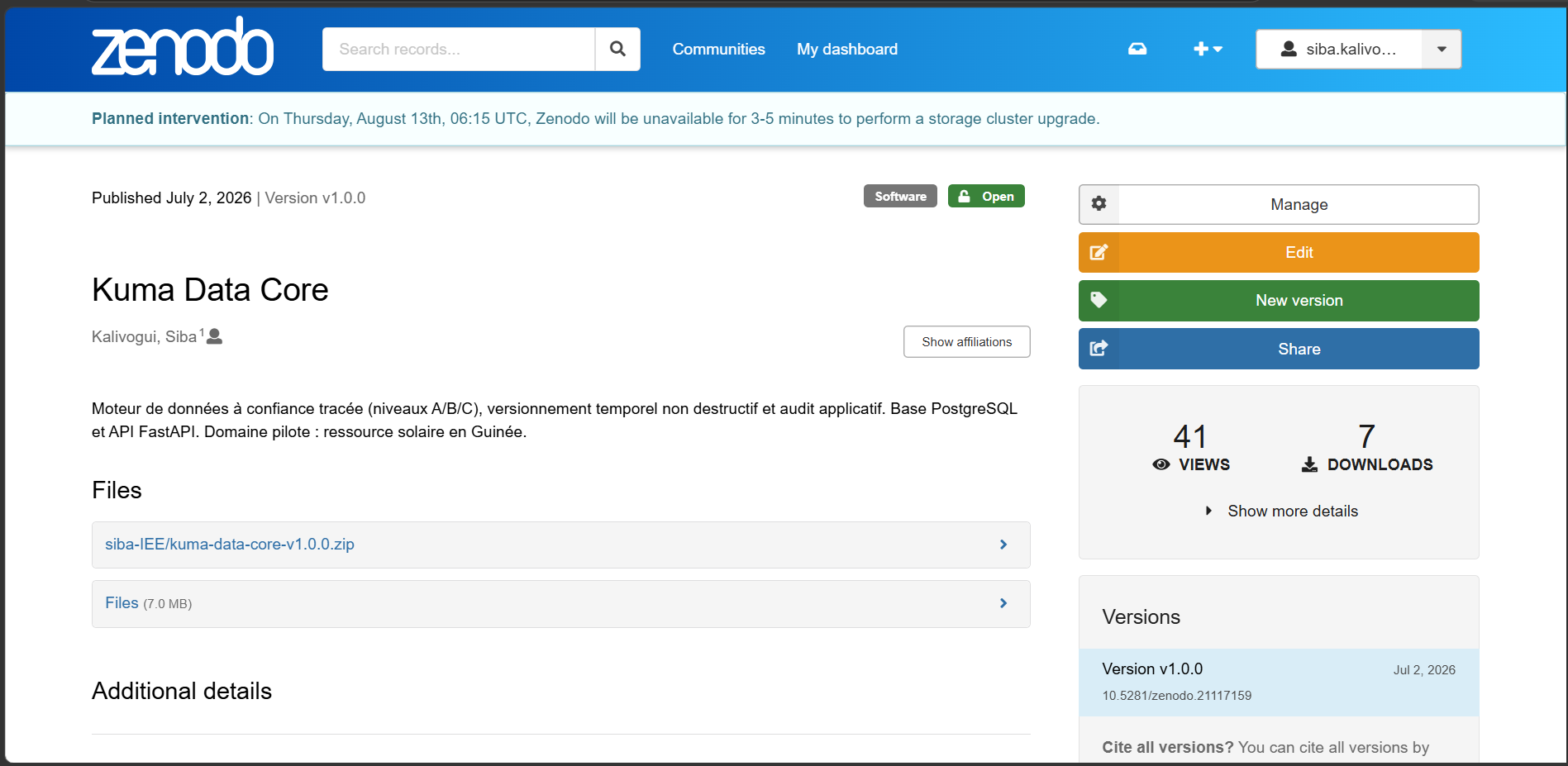
It’s the piece that sits on top of the whole Kuma infrastructure: one generic schema feeding the Kuma Science media, the domain bases (solar first) and the tools that go with them. Its private API exposes 17 endpoints: the catalogue, the series, parametric engineering calculations (POA, thermal correction, realistic PR, soiling) and hourly data run through quality control.
Every datum travels with its passport: primary source, method, confidence level (A/B/C), validity window, editorial status. Nothing gets overwritten; everything is versioned and audited. On the source side: NASA POWER, PVGIS SARAH-3, ERA5-Land, CAMS and the first ground stations, across six pilot cities in Guinea.
RDS Guinée
Live
RDS Guinée
Live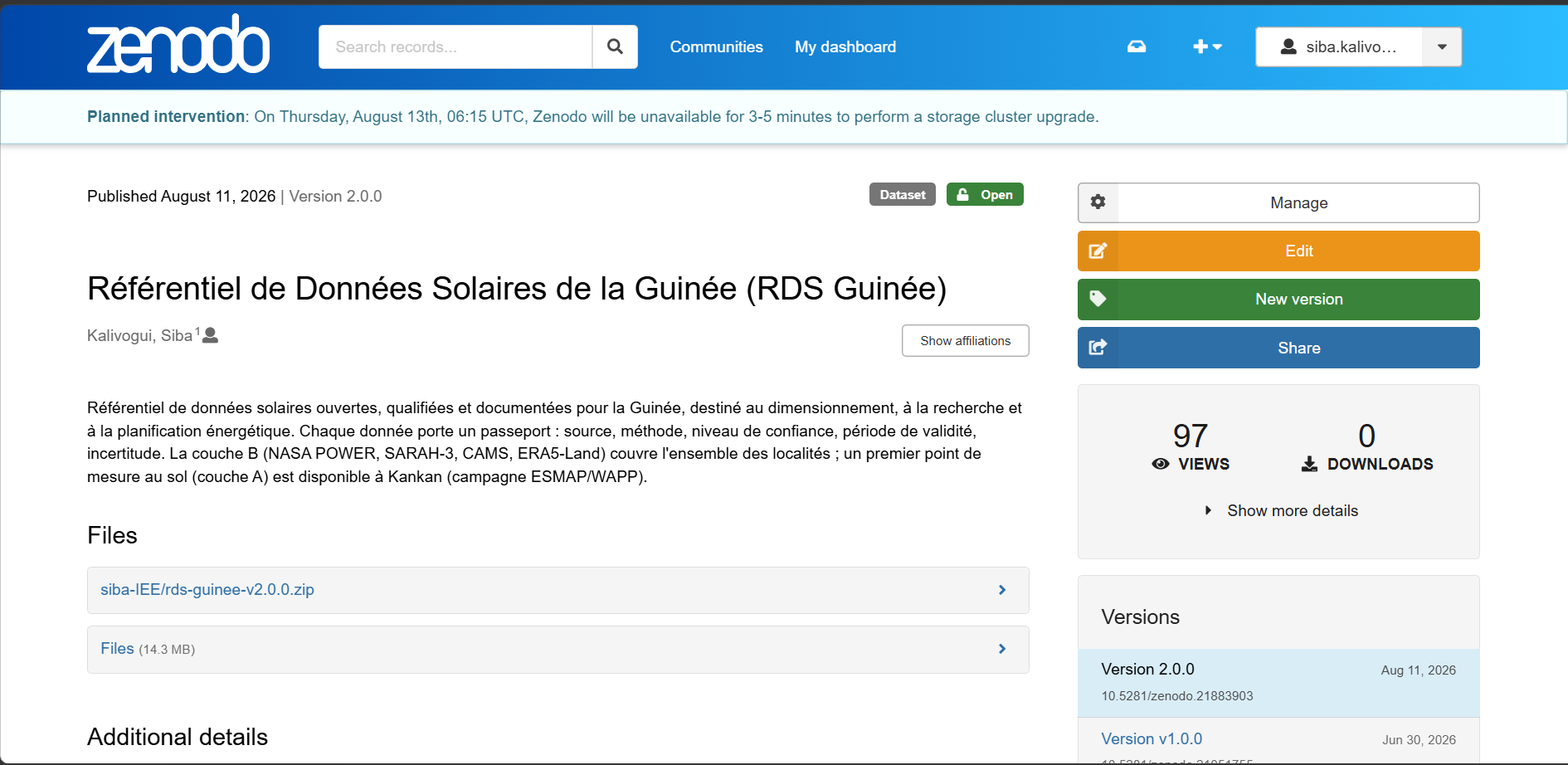
This is a reference, not a warehouse: what counts is the quality of each datum far more than their number. Every measurement travels with its passport (source, method, confidence level, validity window, uncertainty), and the reference is willing to say what it knows as much as what it doesn’t.
Guinea serves as the pilot country. The data there is open (CC BY 4.0), released as versioned snapshots, each archived on Zenodo with a DOI that never moves. Confidence levels run from satellite and reanalysis (B) up to validated ground measurement (A), with a first field point in Kankan.
Platforms
The portals that put the data and tools in the open, method included.
Kuma Science
Live
Kuma Science
Live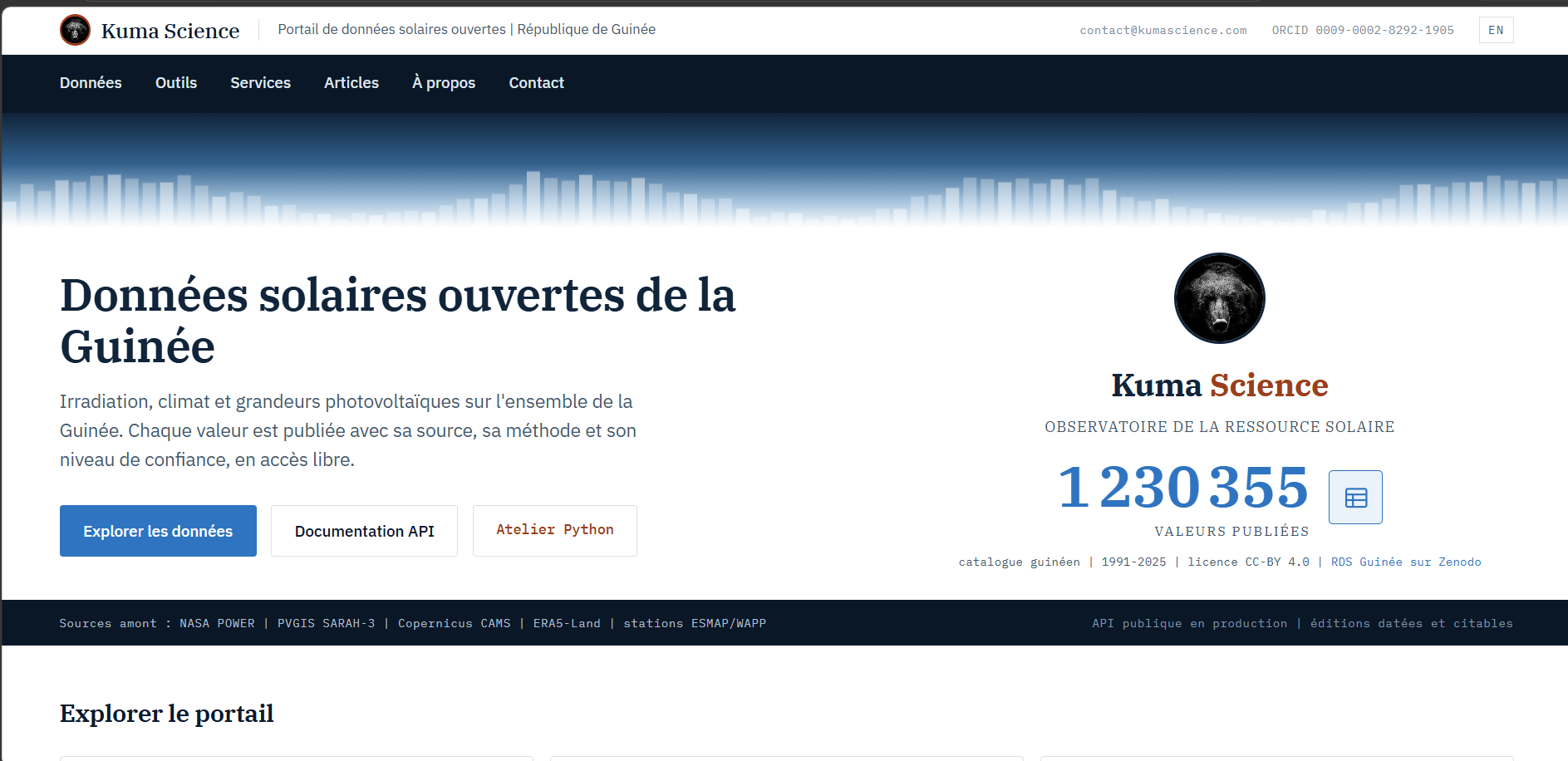
It’s the public front door to Kuma: technical data, method and tools, openly available, for applied energy engineering across French-speaking Africa and tuned to Guinea’s pilot cities. You’ll find the editorial media, the series catalogue (snapshots of the private Kuma Data Core repo), the method pages and a tools shop.
On the technical side, nothing flashy but plenty solid: Astro with static and on-demand rendering, Supabase for accounts, Cloudflare hosting, Sentry to keep an eye on errors, and a full quality chain (tests, lint, CI).
SolClim-3
In progress
SolClim-3
In progressA ground-calibrated solar-data platform for West Africa, from Kuma Science. Its dashboard opens up the open reference of the Guinean pilot and its 34 communes: each block remembers its source, its period and its confidence level, and says where its figures come from.
The series are served as static extracts, hand-picked from the data repository, with a colour palette meant to stay readable for colour-blind viewers.
Tools & software
The software that brings qualified data where it’s needed, from the field to the design office.
Kuma Solar Bridge
In progress
Kuma Solar Bridge
In progress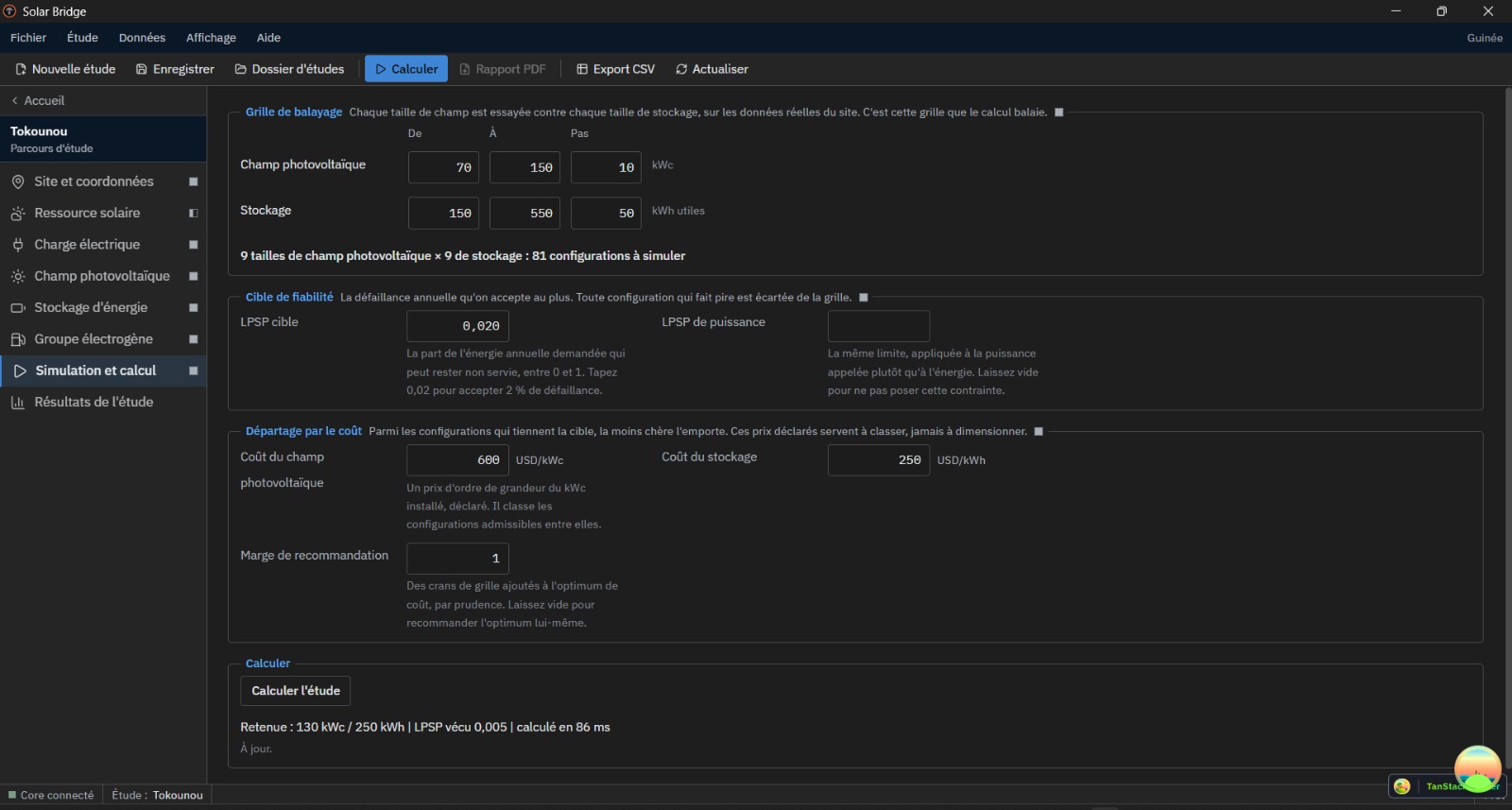
The first tool to come out of the ecosystem, and the first to consume the Kuma Data Core API. Solar Bridge is aimed at West African photovoltaic design offices: it takes the CSV files produced by dataloggers of different makes and puts them back into a workable format. Along the way it carries Kuma’s choices: transparency, an interface that stays out of the way, labels that stay consistent throughout.
Kuma Solaire
In progress
Kuma Solaire
In progress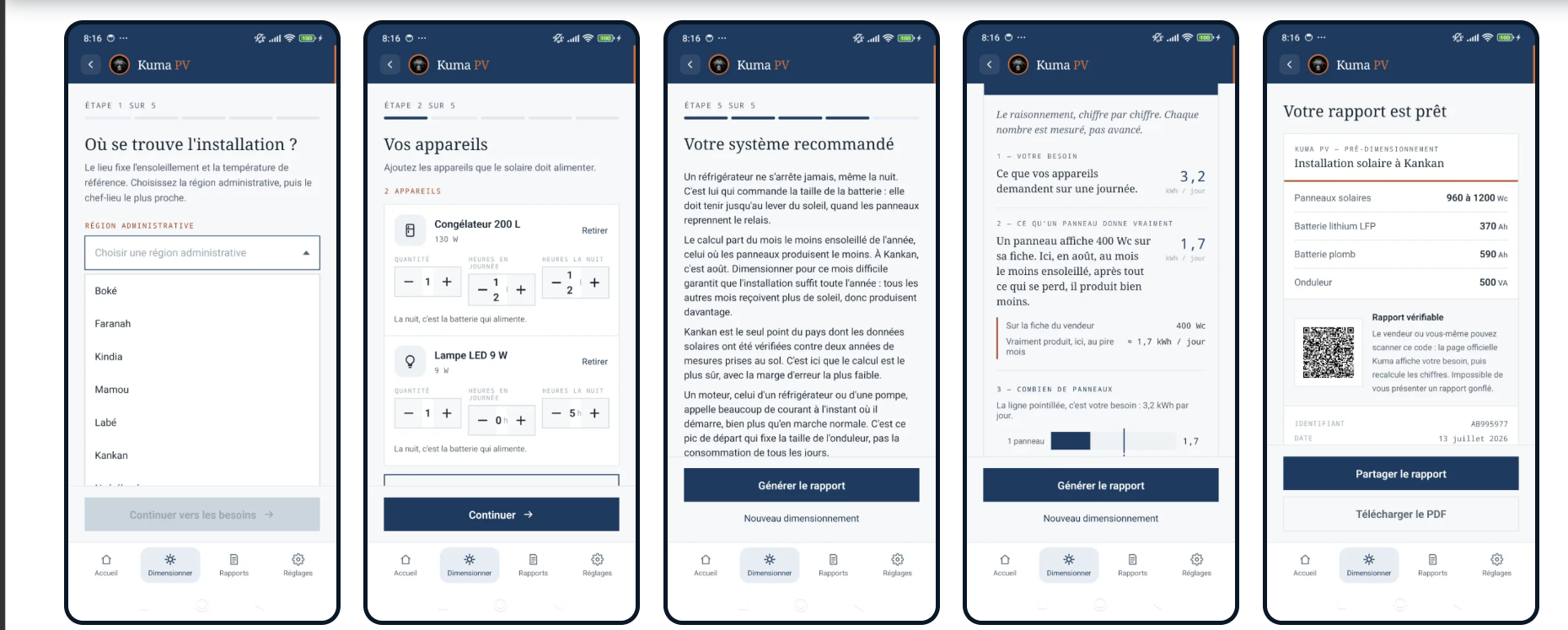
A mobile app for sizing solar right there in the field. It’s built as a TypeScript monorepo around a pure calculation engine, kept away from the interface by a strict import rule and backed by a verification page. Designed for patchy networks and fieldwork in West Africa.